


Most peptides in metabolic research hit one receptor. Maybe two. Retatrutide hits three, and that’s exactly why labs can’t stop talking about it.
Researchers working on metabolic signaling have long had to run separate experiments for GLP-1 pathways, GIP pathways, and glucagon-mediated processes. That’s three protocols, three compounds, three sets of variables. A single tri-agonist compound changes the experimental design completely. And that’s the reason a retatrutide peptide keeps appearing in pre-clinical research environments.
What Makes Retatrutide Different from Other Research Peptides
The Triple-Agonist Receptor Profile
Retatrutide is classified as a triple agonist because it binds to and activates three distinct G protein-coupled receptors: the glucagon-like peptide-1 receptor (GLP-1R), the glucose-dependent insulinotropic polypeptide receptor (GIPR), and the glucagon receptor (GCGR). Each of those receptors sits within a different arm of the endocrine system. GLP-1R and GIPR are the same targets that tirzepatide (dual agonist) goes after. Retatrutide adds glucagon receptor activation on top of both.
That third receptor is not a small addition. Glucagon receptor signaling is involved in hepatic glucose production, fatty acid oxidation, and thermogenesis. Getting all three pathways moving simultaneously gives researchers a model compound they couldn’t really approximate before.
How It Differs from Semaglutide and Tirzepatide
Semaglutide is a GLP-1 receptor agonist. Full stop. Tirzepatide is a dual GLP-1/GIP agonist. Retatrutide adds the glucagon receptor, making it structurally and pharmacologically distinct from both. For labs studying compounds downstream of those receptor-mediated pathways, the difference isn’t just academic. The glucagon component introduces hepatic signaling dynamics that neither semaglutide nor tirzepatide can replicate.
Why Lyophilized Peptide Format Matters for Lab Work
Here’s the thing most people miss: the format a research peptide ships in directly affects experimental reproducibility. Lyophilized peptide material , freeze-dried under vacuum to remove water content , maintains chemical stability far longer than liquid peptide formulations. Liquid reconstitution happens in the lab, on the researcher’s timeline, using solvents appropriate for the specific protocol.
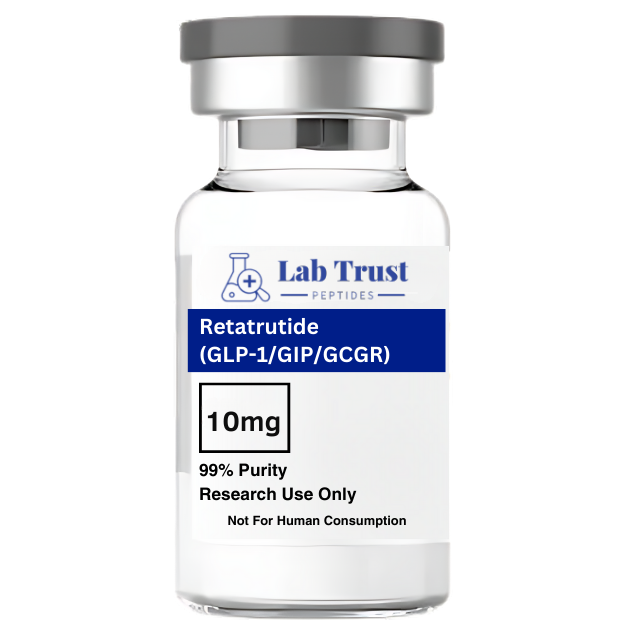
Retatrutide supplied as a lyophilized peptide should arrive in a sealed glass vial. Storage at -20°C before reconstitution. Bacteriostatic water or a compatible solvent (usually sterile saline or DMSO depending on assay requirements) for reconstitution. The absence of moisture during storage means the peptide chain is protected from hydrolysis-related degradation , which matters a lot when you’re working at nanomolar concentrations.
Purity documentation should accompany every vial. HPLC-verified purity at 99% or above is the standard expectation for research-grade supply. Anything lower introduces ambiguity into your data.
Researchers sourcing this compound should verify that the supplier provides a Certificate of Analysis (COA) alongside each batch. For labs that need their retatrutide peptide to be consistent across multiple experiment runs, third-party COA documentation is non-negotiable, not a nice-to-have.
What the Current Research Landscape Looks Like
Phase 2 clinical trial data published in the New England Journal of Medicine in 2023 tracked 338 adults in a 24-week trial of retatrutide administered subcutaneously. The highest dose group (12 mg) showed a mean body weight reduction of approximately 17.5% at week 24. That level of reduction surpassed both semaglutide and tirzepatide benchmarks from comparable trial windows , which is what drove so much of the subsequent pre-clinical interest.
For laboratory researchers, the interesting part isn’t the weight data directly. It’s what that data implies about the combined receptor activity. The glucagon receptor component appears to amplify energy expenditure beyond what GLP-1/GIP activation alone produces. That mechanistic gap is where current research is focused.
Eli Lilly developed retatrutide internally and owns the compound under investigational status. It’s not approved by the FDA for any indication as of mid-2026. Research compounds supplied for lab use are intended for controlled experimental environments, not human therapeutic application.
Practical Notes for Labs Working with Retatrutide
Reconstitution volumes depend entirely on the assay. A 10mg lyophilized vial reconstituted in 1mL of bacteriostatic water gives a 10mg/mL stock , most in vitro assays will dilute this substantially. Working concentrations in cell-based assays typically run in the nanomolar to picomolar range.
Store reconstituted peptide at 2-8°C and use within 30 days. Avoid freeze-thaw cycling after reconstitution. Peptide bond integrity degrades with each freeze-thaw cycle, and at the concentrations you’re working with, that degradation can introduce noise into dose-response curves.
And this is where it gets interesting: labs that run parallel comparisons between retatrutide, tirzepatide, and semaglutide in the same assay window get a cleaner mechanistic picture than any single-compound study. The glucagon receptor contribution becomes isolatable when you control the other two variables.