

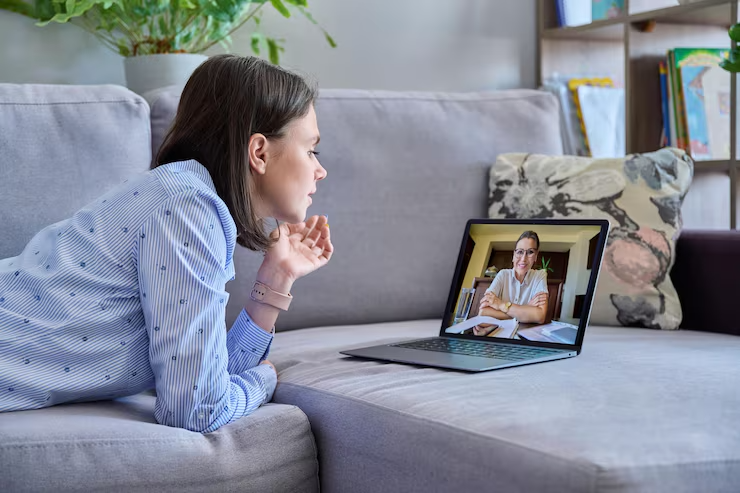
There was a time when the idea of sitting in front of a screen to talk through your anxiety, grief, or relationship struggles would have seemed odd — clinical at best, disconnected at worst. That assumption, quietly, has dissolved.
Mental health support has changed faster in the past five years than in the previous two decades. And for many people across the UK, the shift hasn’t just been about convenience. It’s been about finally getting help at all.
Reaching out to a qualified online therapist UK has become a genuine first port of call — not a fallback — for people who want professional support without the logistical hurdles that once made in-person therapy feel impossible to access.

The Barrier That Wasn’t About Willingness
Geography and availability
Much of the conversation around the mental health crisis in the UK focuses on stigma. But stigma, for many, isn’t actually the main obstacle anymore. The problem is practical. Waiting lists for NHS talking therapies have stretched to months in many regions. Private clinics in major cities are often fully booked. And for anyone living in a rural area — or working shifts that make a 4pm Tuesday appointment impossible — the system simply hasn’t worked.
Online therapy dissolves a lot of that friction. You don’t need to live near a therapist. You don’t need to drive somewhere after a difficult session. You can work with someone based in Edinburgh while living in Cornwall, or book an evening slot that actually fits around your work schedule.
The commute problem nobody talks about
Here’s something that rarely comes up in discussions about therapy access: the emotional cost of getting there. Walking into a session already stressed from traffic or a packed tube isn’t the ideal condition for opening up. Having the conversation from your own home — your own chair, your own tea — removes that layer. For many people, it genuinely makes the session more productive.
What Online Counselling Actually Looks Like
It’s not just video calls
When people imagine online counselling UK, they often picture a slightly pixelated video call. That’s one version of it. But the format varies — some practitioners offer voice-only sessions for clients who find visual self-monitoring distracting. Others use secure messaging for between-session check-ins. The modality can adapt to what actually helps the individual.
What doesn’t change is the therapeutic relationship itself. The same frameworks — CBT, psychodynamic therapy, EMDR, person-centred approaches — are used online as they are in person. Accreditation through bodies like BACP or UKCP applies regardless of how the session is delivered. A good therapist is a good therapist whether you’re in the same room or not.
Who it works for (and when to think differently)
Online therapy works well for anxiety, depression, stress, bereavement, low self-esteem, and relationship difficulties. It’s a strong option for people who’ve already had some experience with therapy and know how the process unfolds. It’s also particularly useful for those managing social anxiety — where getting to a physical appointment can itself be a significant obstacle.
That said, it’s worth being honest: there are situations where in-person support is more appropriate. Severe trauma work, particularly with somatic or body-based approaches, often benefits from a physical presence. If someone is in acute crisis, face-to-face care or crisis services are usually more appropriate first steps. A responsible provider will say this clearly, rather than pretend online therapy is a universal solution.
“The therapeutic relationship is what drives change — not the format. Research increasingly supports that online delivery can be just as effective for a wide range of presentations.”
Finding the Right Fit Without Getting Lost
What to look for in a provider
The growth of online therapy has been largely positive — but it’s also created a crowded, uneven marketplace. Anyone can build a professional-looking website. So due diligence matters.
Start with accreditation. A therapist registered with the BACP, UKCP, or BPS has met recognised training standards and is bound by a code of ethics with a complaints process if things go wrong. Check whether the platform or individual has professional liability insurance — reputable services confirm this without hesitation.
Beyond credentials, think about fit. Many therapists offer a short introductory call before you commit. Use it. You’re looking for someone whose communication style, approach, and area of specialism actually match what you’re working through. It’s not rude to decide a therapist isn’t right for you — it’s sensible.
The conversation about cost
Private therapy — online or in person — isn’t cheap. Sessions typically range from £50 to £120 per hour in the UK, with some variation by location and experience. That’s a real barrier for a lot of people, and it’s worth naming plainly.
Some platforms offer sliding scale fees. Others work with employee assistance programmes (EAPs), which many employers include in their benefits package — it’s worth checking, because a surprising number of people don’t know this is available to them. If you’re unsure where to start, platforms like Hush Tellus provide a clear, structured way to connect with qualified therapists for online counselling UK, without having to navigate dozens of individual practitioner websites on your own.
The Shift in How We Think About Asking for Help
Normalisation without trivialisation
Therapy has become more visible in UK culture — in workplaces, in public conversations, in how people talk about managing difficult periods. That’s mostly a good thing. But there’s a version of “normalisation” that tips into something less useful: the idea that therapy is simply self-improvement, like a gym membership for the mind.
It can be that, sometimes. But it can also be far more significant — a space to process things that have been quietly shaping your behaviour and relationships for years. The accessibility of online therapy doesn’t mean it should be treated as casual. The work is still real work, and the results tend to reflect how seriously both parties take it.
Starting is still the hardest part
Many people describe a gap of months — sometimes years — between recognising they’d benefit from talking to someone and actually booking a first session. That gap isn’t laziness. It’s a mix of uncertainty about how to start, worry about what they’ll have to confront, and the small but real friction of navigating options.
Online platforms have genuinely helped reduce that friction. A booking process that takes ten minutes rather than ten phone calls changes the calculus for people who are already running low on energy.
Conclusion
The case for working with a qualified online therapist in the UK doesn’t rest on novelty. It rests on evidence, practicality, and the straightforward fact that more people are getting help than before — because the route to that help has become meaningfully more accessible. Online counselling isn’t a compromise on quality. For many people, it’s the format that finally makes consistent, professional support possible. If you’ve been sitting on the idea of talking to someone, the infrastructure is there. The harder part — the decision to start — is still yours to make. But it’s a decision worth making.